ChatGPT Captures 95% of AI Referral Traffic — More Than 22x Gemini, Perplexity, and Claude Combined
BrightEdge's August data shows ChatGPT accounted for 95.1% of AI referral traffic, up 101% since the start of the year.
Source TheNextWeb (citing BrightEdge data) · 2026-09-24 · Checked 2026-10-01
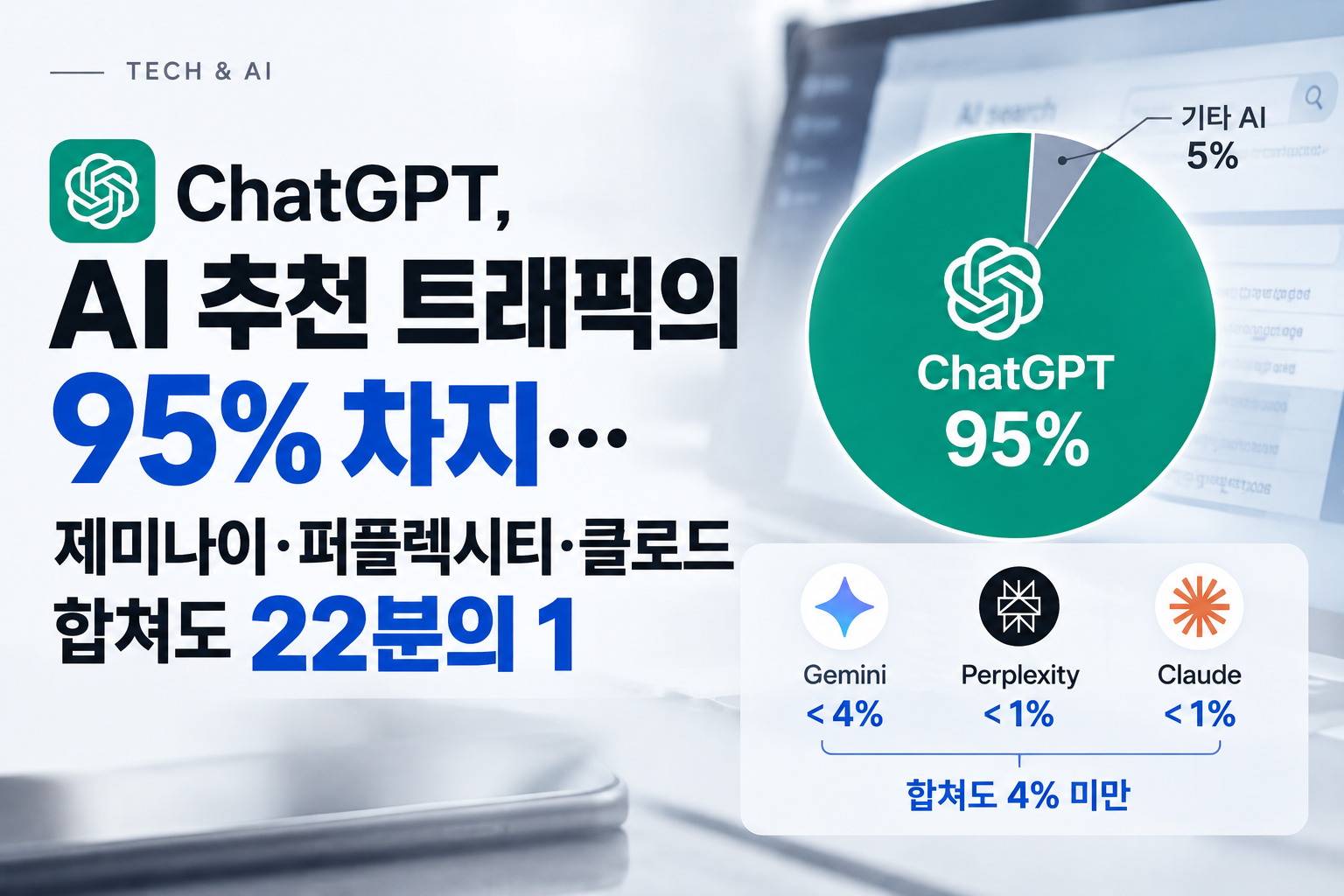
According to August data released by BrightEdge on September 24, ChatGPT accounted for 95.1% of referral traffic that AI platforms sent to websites. Gemini followed at 2.4%, Perplexity at 1.1%, and Claude at 0.8% — meaning ChatGPT alone sent roughly 22 times more traffic than the other three platforms combined.
The growth trend stands out too. ChatGPT's referral traffic grew 101% between January and August this year, with August alone seeing a 36% increase — the largest monthly jump of the year. Gemini, by contrast, grew just 1% that same month, while Claude declined 15% and Perplexity dropped 17%.
Zooming out, though, AI platforms still send far less traffic than traditional search engines. Total referral traffic from AI platforms grew roughly 73% in under a year, but BrightEdge notes it still falls well short of the volume traditional search sends.
What BrightEdge calls referral traffic is visits that actually resulted from someone clicking a link inside an AI answer — a different measure from how often a site gets cited in the first place. In other words, even when multiple platforms cite a site at similar rates, the share of citations that actually convert into a click is heavily skewed toward ChatGPT.
In Korea
If a Korean site is seeing AI referral traffic at all, it's likely coming almost entirely from ChatGPT. Covering multiple AI services evenly still matters, but if the goal is to see results quickly, checking visibility on ChatGPT first is the more efficient place to start.
Sources
This article was written after reviewing the original source below.
TheNextWeb (citing BrightEdge data)