ChatGPT Is Seeing More Info-Seeking Questions. What Should Content Change?
How to adjust content structure as information-seeking questions grow as a share of ChatGPT usage.
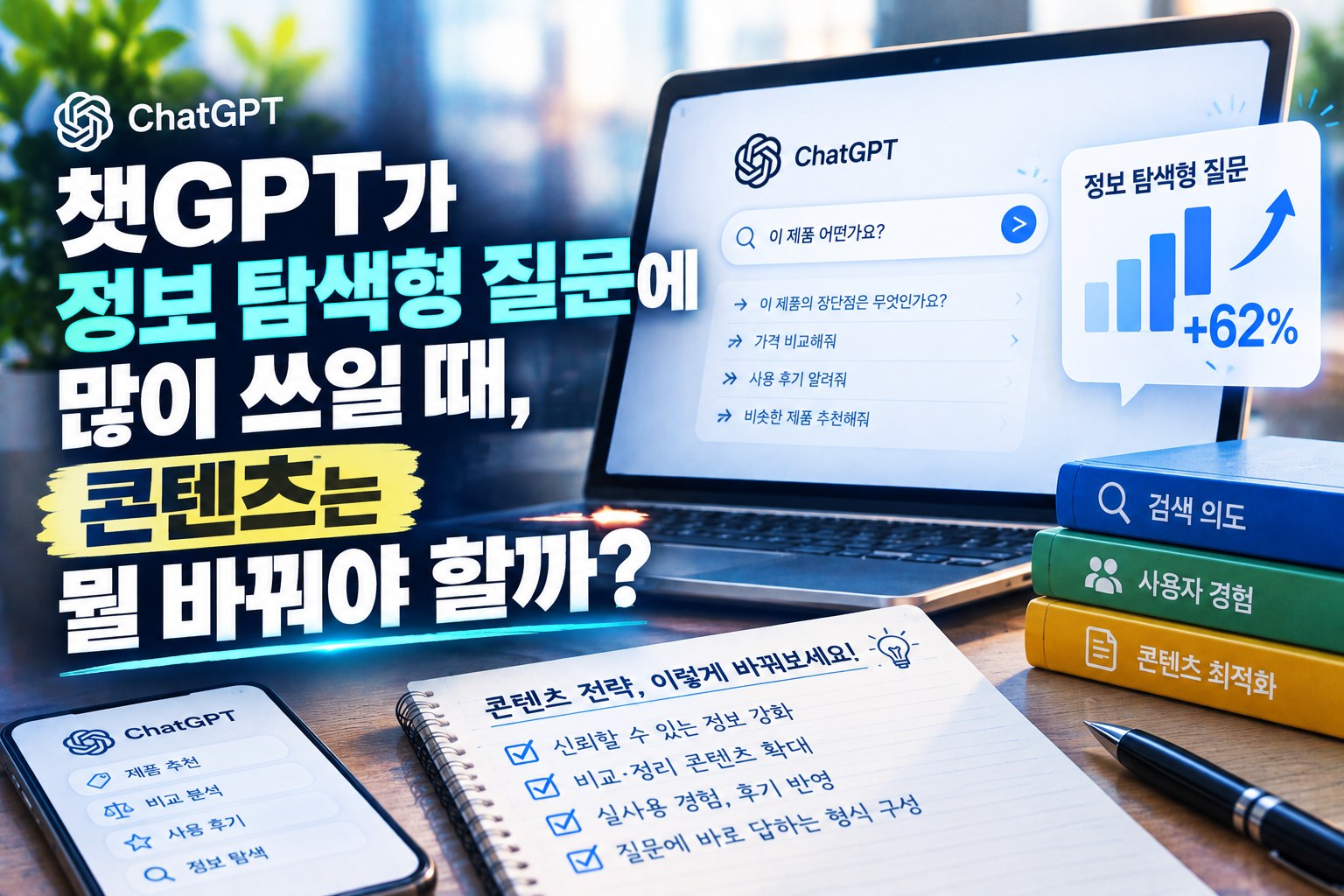
OpenAI's own ChatGPT usage data shows a clear trend: requests to write something are slowly declining, while "information-seeking" questions that ask for facts or how-to answers are slowly rising. Anyone creating content should treat this as a signal worth acting on, not ignoring, because as the nature of questions shifts, so does what AI chooses to cite.
Why this shift matters now
In July 2024, 34.1% of ChatGPT conversations were writing requests, and information-seeking questions made up just 16.7%. By September 2026, writing had fallen to 21.4% while information-seeking climbed to 20.2%, closing the gap considerably. With a month where the ranking briefly flipped, it's fair to say the reasons people turn to ChatGPT are gradually shifting.
What counts as an information-seeking question
OpenAI groups fact-checking questions, product or purchase questions, and cooking or everyday-life questions together under information-seeking. What they share is that the user isn't looking for a long read, they want their question resolved quickly. The clearer and more directly usable an answer is, the easier it is for AI to lift that content into its response.
Why practical guidance keeps the top spot
"Practical guidance," which includes how-to advice and tutoring, has held the largest share every single month since March 2025. That consistency suggests users are asking ChatGPT about process as often as they ask about outcomes. Step-by-step explanations are being requested more consistently than plain factual listings.
Structuring content AI can cite easily
Content works best when one question gets one direct answer. Try leading with the conclusion or key figure up front, then following with supporting evidence and context. If a piece opens with a long introduction before getting to the answer, AI may struggle to tell which part to use and skip the whole thing.
Lists and numbered steps help too. Content broken into "step 1, step 2" is easier for AI to pull the relevant piece from, and easier for it to surface the exact step a user wants. Just don't over-fragment steps into too many numbers, since that can blur the actual point; split only where a real distinction exists.
Headlines closer to a question format also help. The more a title resembles something a user would actually type into ChatGPT, the more likely it is to be pulled as the answer to that question.
Addressing work-related questions
Work-related conversations make up 32.2% of all messages, and information-seeking's share within that category has risen noticeably this year. It held between 10.7% and 12.1% from July 2024 through July 2026, then climbed to 13.9% in August and 15.2% in September. If you run content about tool usage or workplace procedures, this is a good moment to dig into the specific points where users actually get stuck.
OpenAI's separate work-activity analysis classifies messages from nearly 100 countries into 165 work activities. The declining share held by the top 10 activities suggests work-related questions are becoming more varied rather than concentrated in a handful of routine requests. Content covering procedures specific to a role or industry may get more chances to answer these finer-grained questions going forward.
Writing content still matters
A rising information-seeking share doesn't mean writing requests have disappeared. Writing was still the single largest category in September at 21.4%, since the gap narrowed without the ranking fully reversing. Rather than rushing to overhaul existing content formats, it's safer to add content for information-seeking questions alongside what you already have.
Does this vary by industry
OpenAI's figures are an average across all users, so the share may feel different industry by industry. Businesses where users frequently compare prices or research products may see a much higher share of information-seeking questions than average, while creative or planning-heavy industries may keep a higher writing share.
The most realistic way to gauge how this plays out in your industry is to look at customer inquiries and search query data together. Checking which content formats from competitors get cited in AI answers, on a quarterly basis, builds a useful baseline for tracking where information-seeking questions are heading in your space.
For smaller teams
Rather than reworking everything at once, it's more efficient to pick the 3 to 5 most common customer questions and build short pieces that answer them directly first. For existing long-form content, adding a summarized answer at the top is often enough to make it easier to cite, without rewriting the whole piece. Checking how the numbers shift each time OpenAI releases a new data version, roughly once a quarter, helps you track whether this trend keeps going or reverses.